


We build maintainable WordPress plugins around real workflows, clear ownership, dependable releases, and long-term support.
Why WPStack exists
Too many WordPress plugins are built for the demo rather than the years that follow. The first release works, but maintenance becomes expensive, updates become risky, and ownership remains unclear.
WPStack was formed around a simpler standard: understand the business problem, make the architecture legible, build within WordPress conventions, and stay accountable through testing, release, and support.
What guides our work
Four standards guide every architecture decision, release check, and support commitment we make.
WordPress-native
We work with the platform’s established APIs, permissions, data models, and extension points before inventing custom machinery.
Maintainable by design
Readable architecture, documented decisions, and predictable update paths keep every product manageable after launch.
Evidence before release
Testing, security review, compatibility checks, and release validation turn assumptions into defensible decisions.
Ownership after launch
Clear handover, monitoring, maintenance planning, and responsive support keep responsibility visible.
How we work
A plugin moves from idea to production through a clear chain of decisions, evidence, and responsibility.
Understand the problem
We clarify users, workflows, constraints, ownership, and the business result before deciding what the plugin should become.
Design the architecture
We map data, permissions, integrations, admin experience, failure states, and update strategy before implementation hardens assumptions.
Build in visible increments
Working slices are reviewed early. Technical decisions stay documented, and feedback enters before rework becomes expensive.
Validate the release
Automated checks, manual QA, compatibility testing, security review, and WordPress.org requirements are treated as delivery work.
Support what ships
Handover, monitoring, maintenance planning, and future changes are considered part of the product rather than an afterthought.

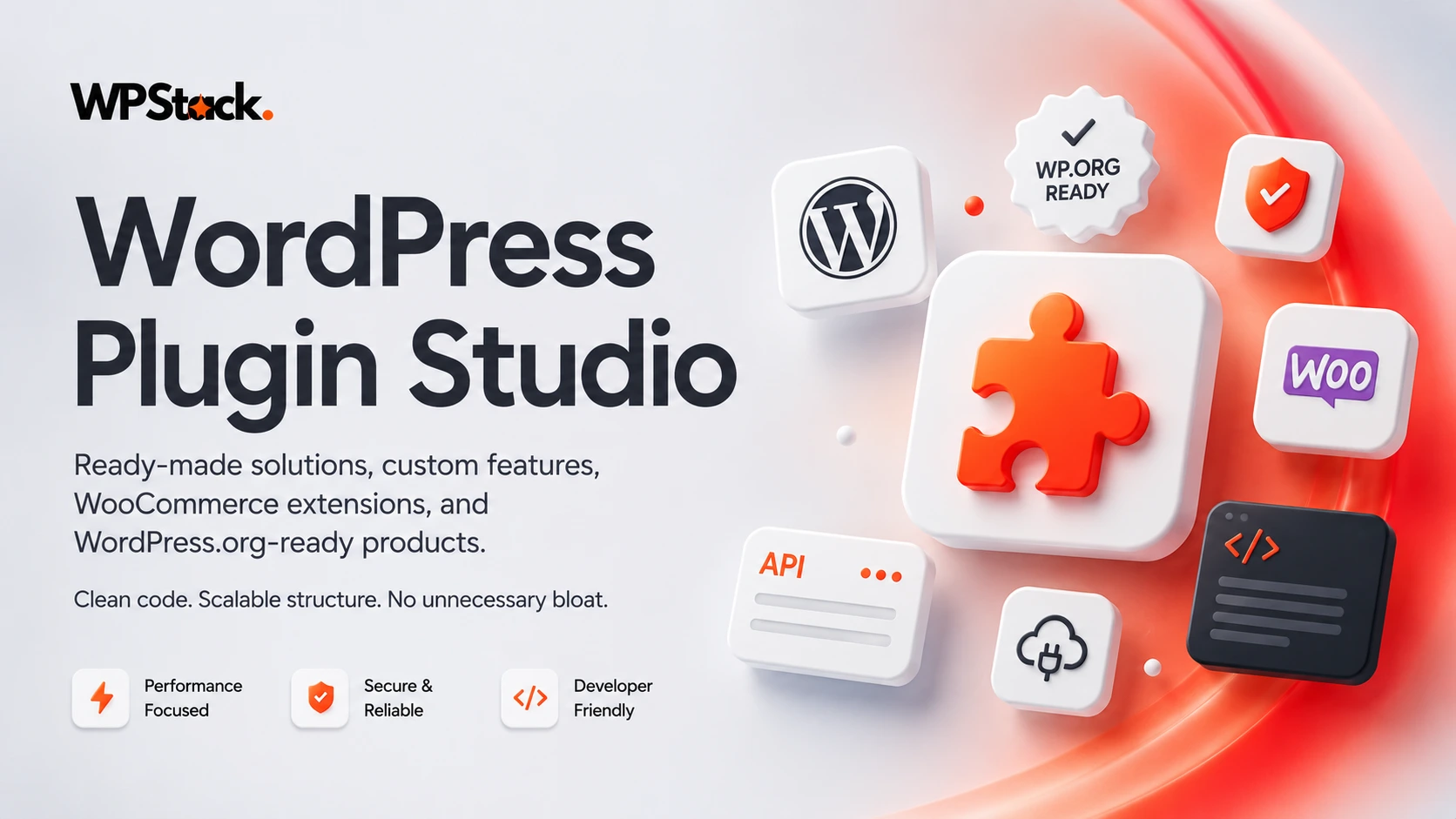
We build and maintain dependable WordPress plugins, WooCommerce extensions, and product integrations for businesses worldwide.
Built for WordPress Products
Based in India. Launched for global businesses.
Start Your Plugin Project
From ready-made tools to fully custom WordPress solutions.
Trusted by 100+
top-tier brands








Delivery-Obsessed.
Proven in Production.
Clients Actually Say




Delivery-Obsessed.
Proven in Production.
Clients Actually Say

Build Your Next Plugin